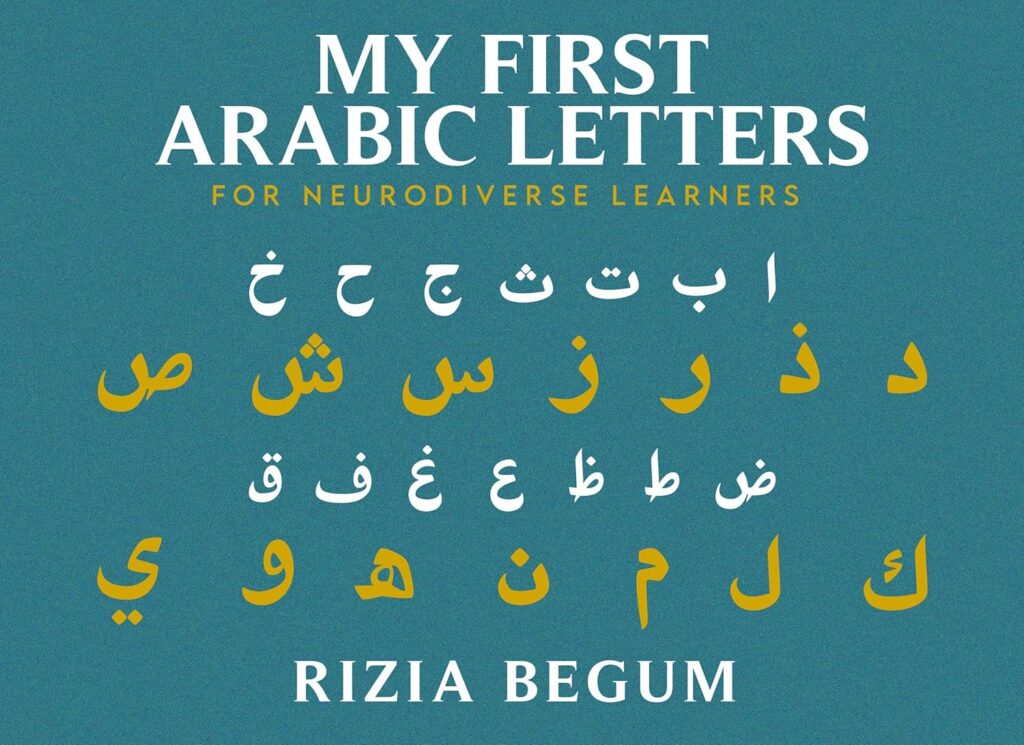
My First Arabic Letters: For Neuro-diverse Learners
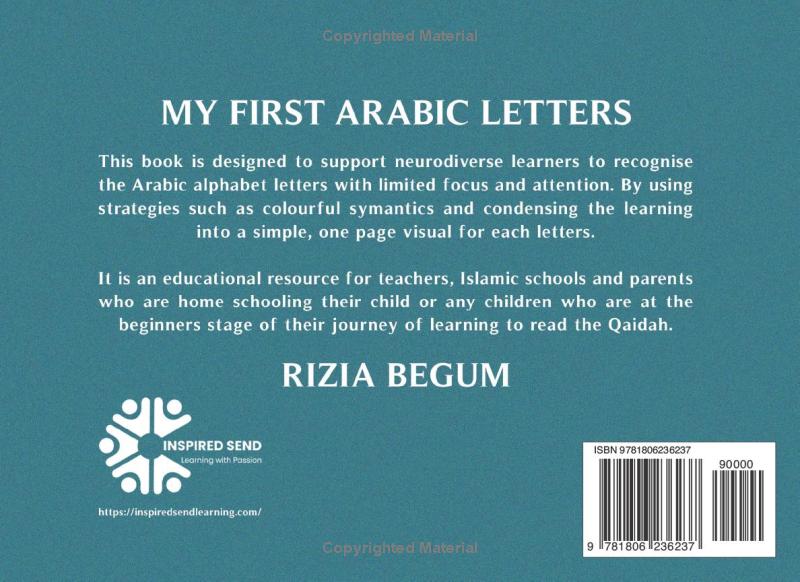
Unlock the beauty of the Arabic language with this specially designed resource book for children with special educational needs. Created with love and care, this book supports children with autism, ADHD, and other neurodiverse learning styles in recognizing and learning the Arabic alphabets in a simple, engaging, and effective way.
A great resource for teaching Arabic to young children.
Explore the many reasons why you should choose this book today.
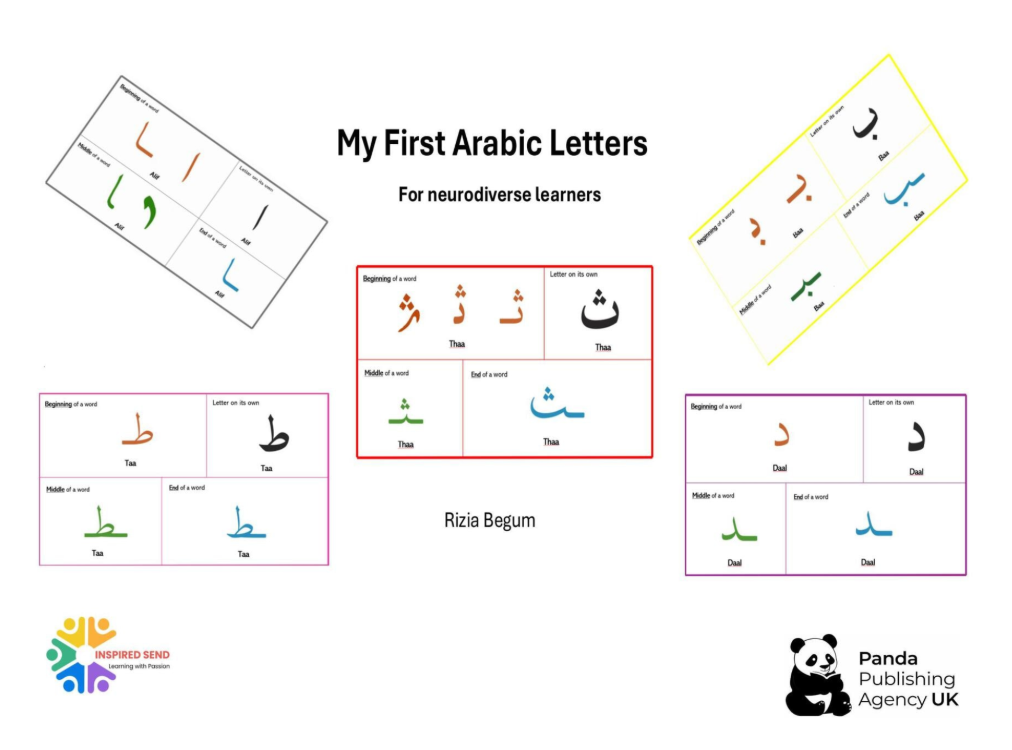
Whether used in Islamic schools, classrooms, or homeschooling environments, this book provides parents, teachers, and caregivers with a powerful tool to nurture learning. Each page is thoughtfully structured to help children build focus, confidence, and a positive relationship with the Arabic language.
Perfect for Muslim parents, educators, and caregivers, this book bridges the gap between traditional learning and the diverse needs of today’s children. Whether you are supporting a child at home or in an educational setting, this resource empowers you to help them learn the Arabic alphabets with joy, patience, and confidence.
More than just an alphabet guide, this resource has been designed as an inclusive educational aid. It recognises the unique challenges faced by children with special needs and learning differences and offers them an accessible, supportive pathway to success. With patience, repetition, and gentle encouragement, children will be able to recognise and connect with each letter of the Arabic alphabet.
START YOUR JOURNEY
My First Arabic Letters
Bring home this essential guide and support your child’s journey of learning, discovery, and growth. The Arabic language is a gift and every child deserves the chance to unlock it.
About the author
Rizia Begum is a PGCE qualified Specialist Teacher in Speech, Language, Communication, Autism / ADHD. She is the CEO and the director of the company, Inspired SEND Learning, a training centre that delivers a wide range of courses, both online and in person to clients from public, corporate, government and private sectors.
Frequently Asked Questions
1) Who is this book for?
This book is for all children who are at the beginners stage of learning to read the qiadah and recognising the Arabic letters
2) Will this book help my autistic child learn?
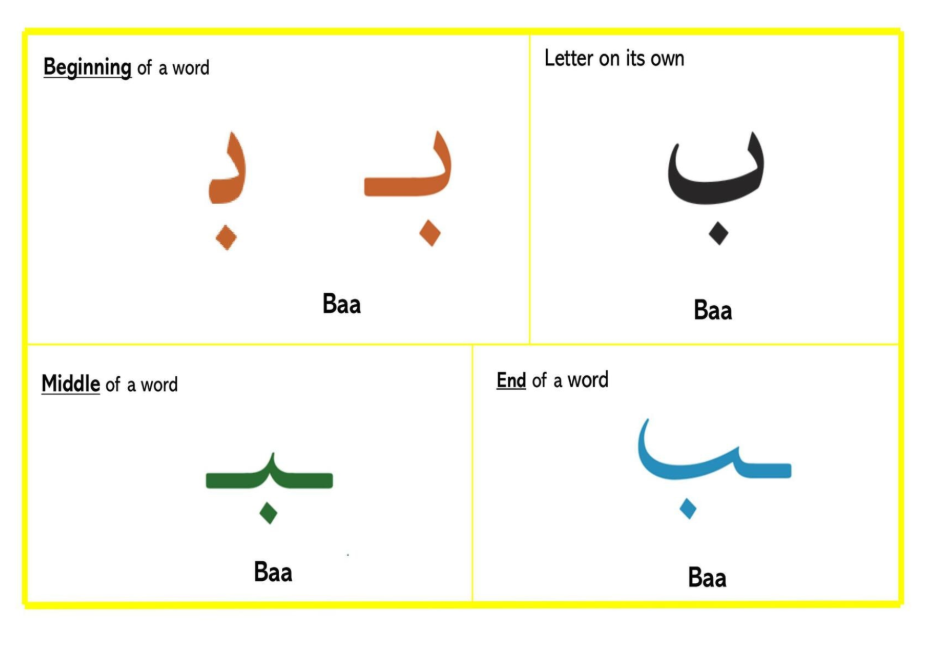
Yes, this book has been designed specifically to help autistic, ADHD, dyslexic or other neurodiverse learners to recognise the Arabic letters. It is a pictorial book that has less words and uses the strategy like colourful semantics that will support the learner recoghise the letters and read Arabic words using vowels.
3) Does the book pages turn from right left?
The book’s pages turns from left to right, but the context in the book is written from right to left. These learners are visual learners and it is important that we are building on what the child already knows and has been exposed to in mainstream schools.
e-book & paperback
Accessibility
Words from Our Clients
Testimonials
Hear what our satisfied clients have to say about this book
As a parent of a child with Autism, I have always struggled to find learning resources for my child to know a little bit about the Quran as there is no madrasa or Arabic school accessible to me where my sons needs will be met. This Arabic alphabet book has been extremely beneficial for my son. The layout is clear and uncluttered, making it easy to follow without being overwhelming. Each letter is introduced in a visually engaging yet calming way, with thoughtful use of color, repetition, and sensory-friendly design. Rizia understands the needs of both neurodivergent children and adults. My son for the first time, seemed excited about learning the Arabic letters. Highly recommended for families, educators, and anyone looking for a simple and well-designed Arabic learning resource for children or even adults who are neurodivergent.
I think the book is beneficial for kids who have autism or any other neurodiverse
conditions. The arabic book helps them to understand – giving them a visual learning
to read easier.
Anisa Rahman
Very easy to read and understand and simplified
Nazma Ali
Dear Readers,
As the author of this book, I felt I had to share the reasons why I spent the Summer 2025 to publish this book whilst on Maternity Leave. There are no resources, or Islamic schools, settings or Madrasha’s out there that accommodate for neuro-diverse learners to learn the Arabic, letters, Qaidah and the Qur’an.
Majority of the time families are told that their child needs a 1:1 for their learning. This can then become a financial burden on many families. However, the sad reality is that such institutes and setting’s staff don’t know HOW to teach these children who have very limited focus and attention or ‘LEARNING DIFFERENCES’. It is the adult who is teaching and facilitating the learning that has ‘LEARNING DIFFICULTIES’ because they are unable to adapt the learning activities or learning for them. So I wanted to make a resource globally available for everyone to access and benefit their child in learning the early foundation of learning to read the Qur’an; using an holistic approach and build on what the child may already know and has been exposed to in mainstream and specialist schools or provisions.
This book wasn’t published for profit, but for visibility and wanting neuro-diverse children and adults to know that they have not been forgotten. Someone is out there that cares and knows their struggles. Every effort that is made is a testimony to our Lord that we tried.
I hope you enjoy it just as much my children do.
Rizia